AI Visibility & Answer Engine Optimization for Executives
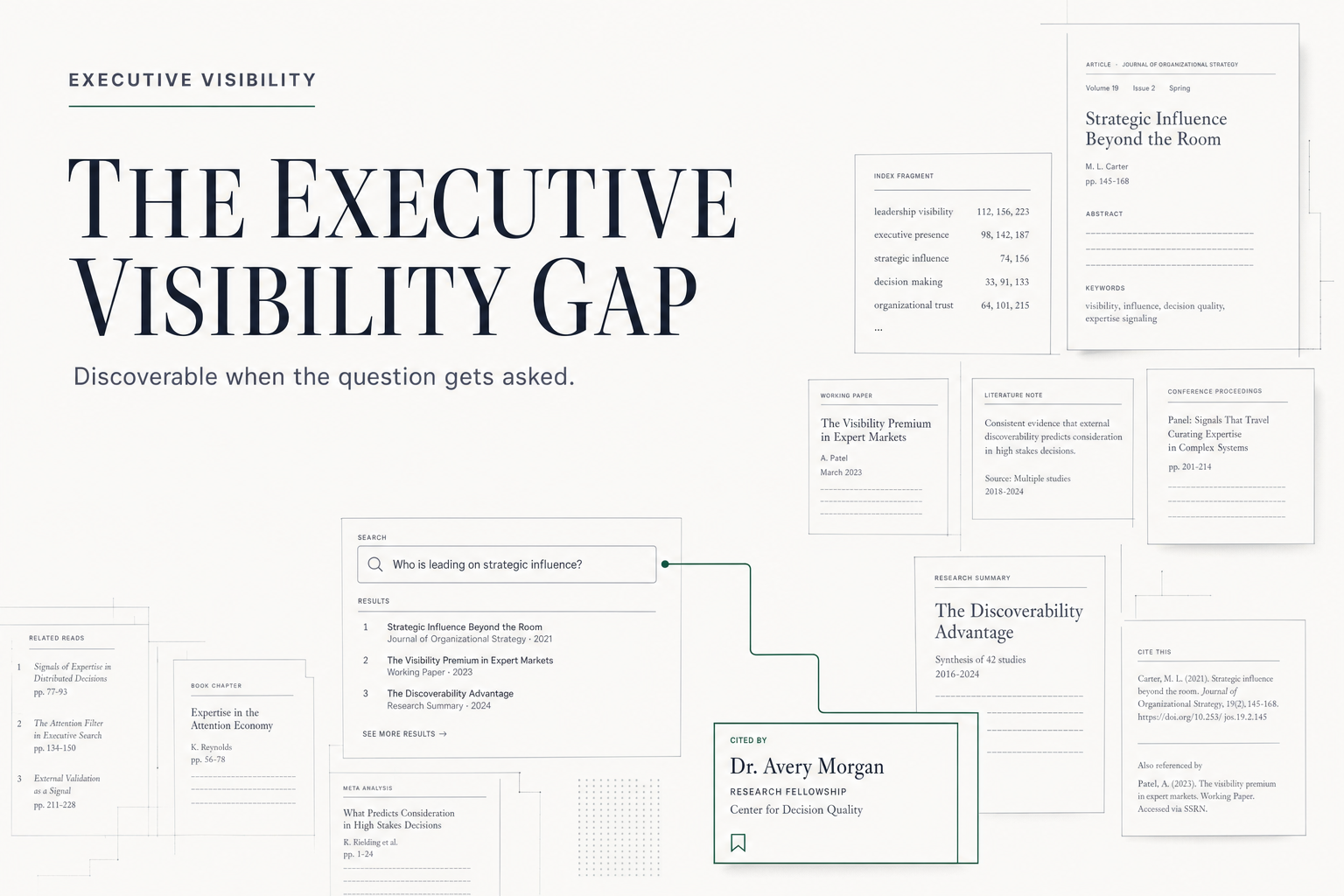
The Executive Visibility Gap Nobody's Talking About
Key Insight: When a board searches for an advisor at 11 PM, when a journalist needs an expert quote on deadline, or when an AI tool synthesizes an answer to "who leads enterprise risk strategy in industrials," your LinkedIn follower count means nothing. The executives who control those moments own something most qualified leaders don't: a discoverable, indexed record that surfaces when the question gets asked and they're not in the room.
I've watched boards skip past executives with 20 years of operational credibility because their names didn't appear in the research. Not because they weren't qualified. Because the search stopped at people whose expertise was already indexed, structured, and citable by the tools doing the work.
Why Visibility Inside Your Network Doesn't Solve the Real Problem
Your LinkedIn posts reach the people who already follow you. That audience compounds slowly, but it stays inside your existing professional circle. The board recruiting for a security advisor isn't scrolling your feed. The journalist writing about supply chain resilience under tariffs isn't in your network. The executive looking for a technical expert to validate a diligence process isn't going to see your last post.
Those searches happen outside your network entirely. They happen in AI tools synthesizing answers from indexed sources. They happen in search bars pulling from crawlable content, not from social platforms designed to keep attention inside a walled garden. If your expertise lives only in posts that disappear from feeds after 48 hours, you're invisible in the searches that actually matter.
The gap isn't follower count. It's discoverability when you're not in the room.
What It Takes to Be Discoverable When the Question Gets Asked
Being the answer when someone searches your domain requires three things working together, not one tactic in isolation.
First, you need indexed content under your own name. That means articles, interviews, bylines, or published insights tied directly to your identity and hosted on platforms search engines and AI tools can crawl. A great LinkedIn post gets engagement. It doesn't get indexed as a durable answer to a search query six months later.
Second, the content needs to be structured for extraction, not just written well. AI tools don't cite based on style. They cite based on whether your insight can be pulled cleanly as a standalone answer. That means specifics: named frameworks, named outcomes, concrete numbers, real examples tied to recognizable entities. Vague language and hedged generalities don't surface when someone asks a pointed question.
Third, consistency compounds. One piece of indexed content establishes a data point. Five pieces over six months start to build a pattern. Fifteen pieces across a year make you someone the AI tool starts associating with the domain itself. The executives who show up in these searches didn't get there with one viral post. They built a track record methodically, in their own voice, over time.
The Difference Between Social Reach and Search Authority
I've sat in rooms where someone asked "who do we know in OT security leadership?" and watched the conversation stop at whoever came up in a quick Perplexity search or a LinkedIn query typed by the intern tasked with building the list. The people who made that list weren't the best operators. They were the ones whose names appeared in results when the question got asked.
Social reach measures how many people see your content right now. Search authority measures whether you appear when someone looks for expertise in your domain later, when you're not there to make the introduction yourself.
That distinction is what most executives miss. They focus on building an audience inside one platform, assuming visibility will transfer. It doesn't. The board searching for advisors isn't starting with your follower list. They're starting with a search bar, and if your name doesn't appear in the first set of results, the conversation moves on without you.
What This Looks Like in Practice
A CISO I know spent 18 months building a consistent publishing rhythm: one article every three weeks on enterprise risk, AI governance, and incident response strategy. Not long pieces. Not viral content. Just clear, specific insights published under his own name on his own site and syndicated to a few indexed platforms.
When a board started looking for someone with deep AI risk and M&A diligence experience, his name came up in the research before anyone made an introduction. The search didn't start with his LinkedIn profile. It started with a set of questions typed into an AI tool, and his published content answered three of them directly. By the time the first conversation happened, he was already the leading candidate.
That outcome didn't come from reach. It came from building search authority methodically, in a way that let the work speak for itself when the question got asked.
The Criteria That Actually Drive Discoverability
If you're serious about being found when it matters, the criteria are clear. You need content that meets all of these, not just one or two:
- Indexed and crawlable: Hosted on platforms search engines and AI tools can access, not locked inside social feeds or paywalled archives
- Tied to your identity: Published under your name with consistent entity signals so the search engine knows it's you
- Specific and extractable: Written with concrete details, named frameworks, and real examples that can be cited as standalone answers
- Consistent over time: A track record that builds pattern recognition, not one-off pieces separated by six-month gaps
- Aligned to high-value queries: Focused on the questions people actually ask when they're looking for expertise in your domain, not generic thought leadership disconnected from real search behavior
Most executives trying to build visibility focus on the wrong end of this list. They optimize for engagement and reach inside one platform, then wonder why their name doesn't come up when the board does the research.
The Long Game on Authority
The executives who control the room before anyone speaks didn't get there by chasing followers. They built a permanent, searchable record of what they know, structured in a way that lets the right people find them when the question gets asked.
That's not a visibility project. It's an authority project. And it compounds in ways social reach never will.
Key Takeaway: The executives who appear in high-stakes searches own indexed, specific, consistent content that answers the questions decision-makers actually ask, not engagement metrics inside a platform they don't control.
If the people who could change your trajectory searched for what you know right now, would they find you?
More from James Faxon
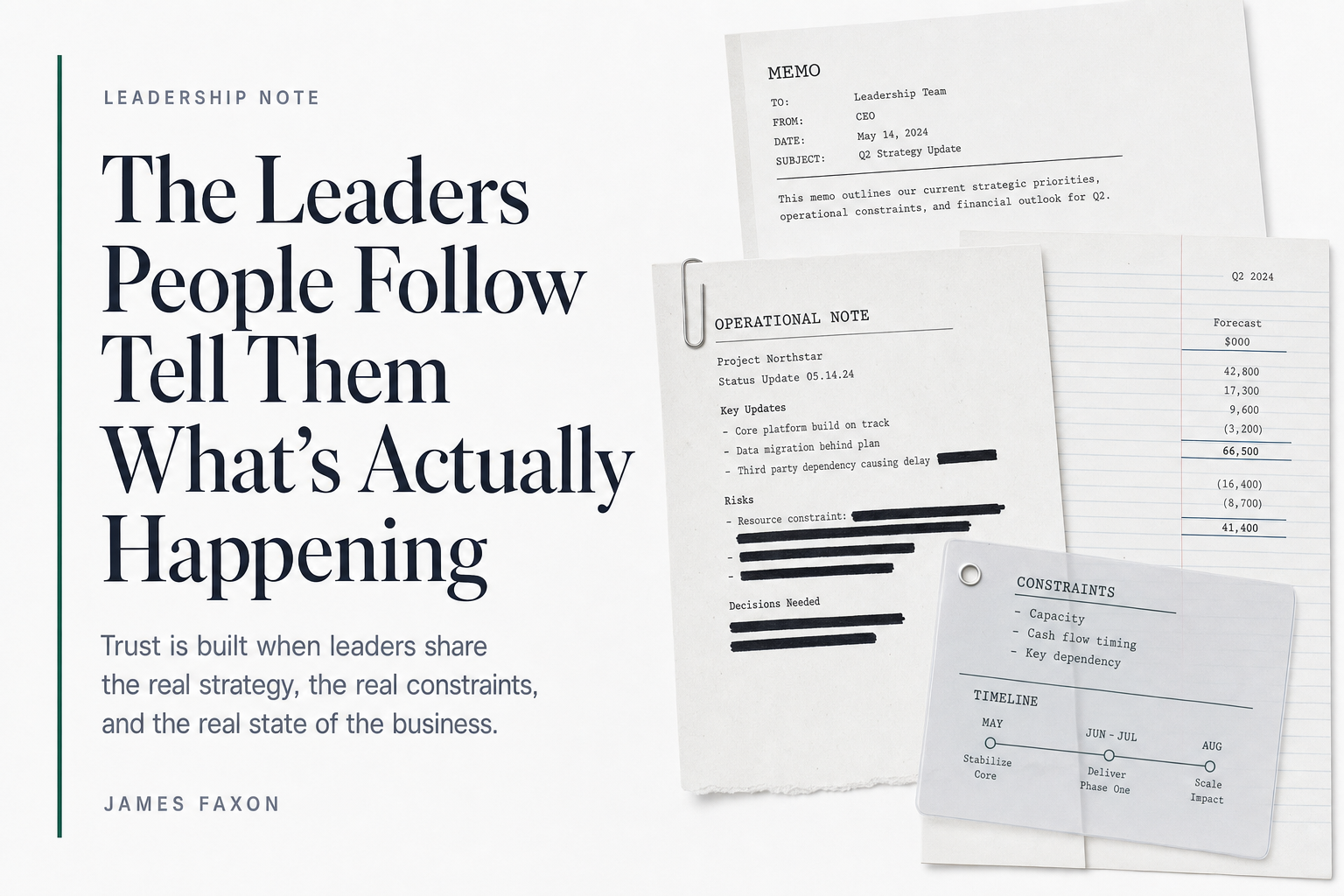
Leadership in the Post-Loyalty Corporate Era
· James Faxon · 6 min read · The Leaders People Follow Tell Them What's Actually Happening Key Insight: Most leaders respond to eroding corporate loyalty by...

The Real Strategic Layer Underneath Executive Content Nobody Wants to Talk About
· James Faxon · 3 min read · A few days ago I wrote something critical of ghostwriting, and it kicked off a good debate in the comments. One exchange in particular...
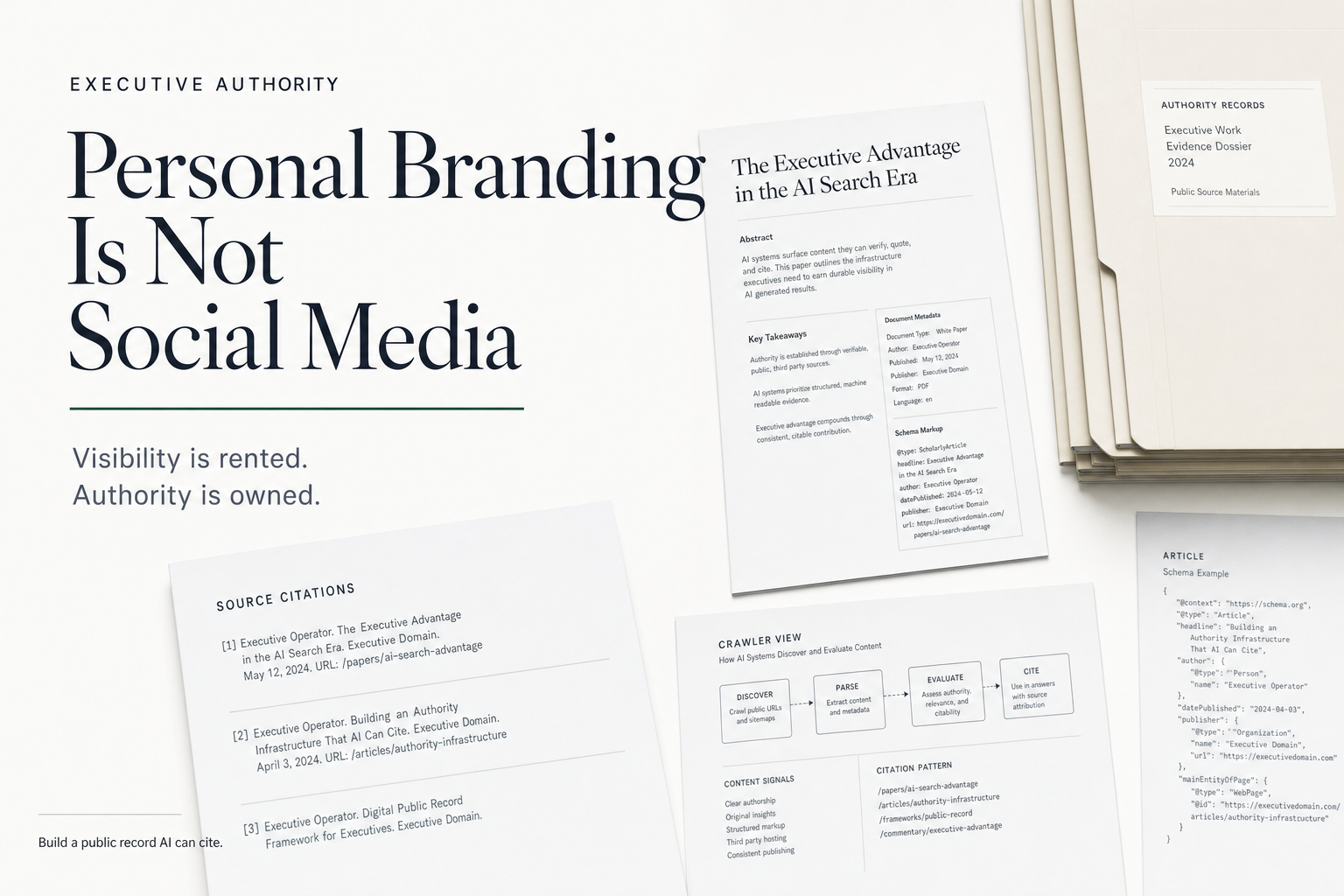
Executive Personal Branding Is Not Social Media
· James Faxon · 5 min read · I spent over 20 years running enterprise security and IT programs where credibility was the only currency that mattered. You earned trust...