Executive Personal Branding Is Not Social Media
I spent over 20 years running enterprise security and IT programs where credibility was the only currency that mattered. You earned trust before you built strategy, or you didn't last. That same dynamic is now playing out in how executives build their public record. The difference is most people are solving the wrong problem.
They treat personal branding as a social media project. Post three times a week on LinkedIn. Track likes and comments. Hope the algorithm surfaces your content to the right people. That's visibility work, not authority work. And the gap between the two just became permanent.
What Actually Gets Cited When Decisions Get Made
Visibility is rented. You're dependent on platform algorithms, engagement mechanics, and feed lifecycles you don't control. The second you stop posting, you stop existing in that system. Your content lives under someone else's metadata, gets buried in feeds within 48 hours, and leaves no searchable trail when someone asks about your domain.
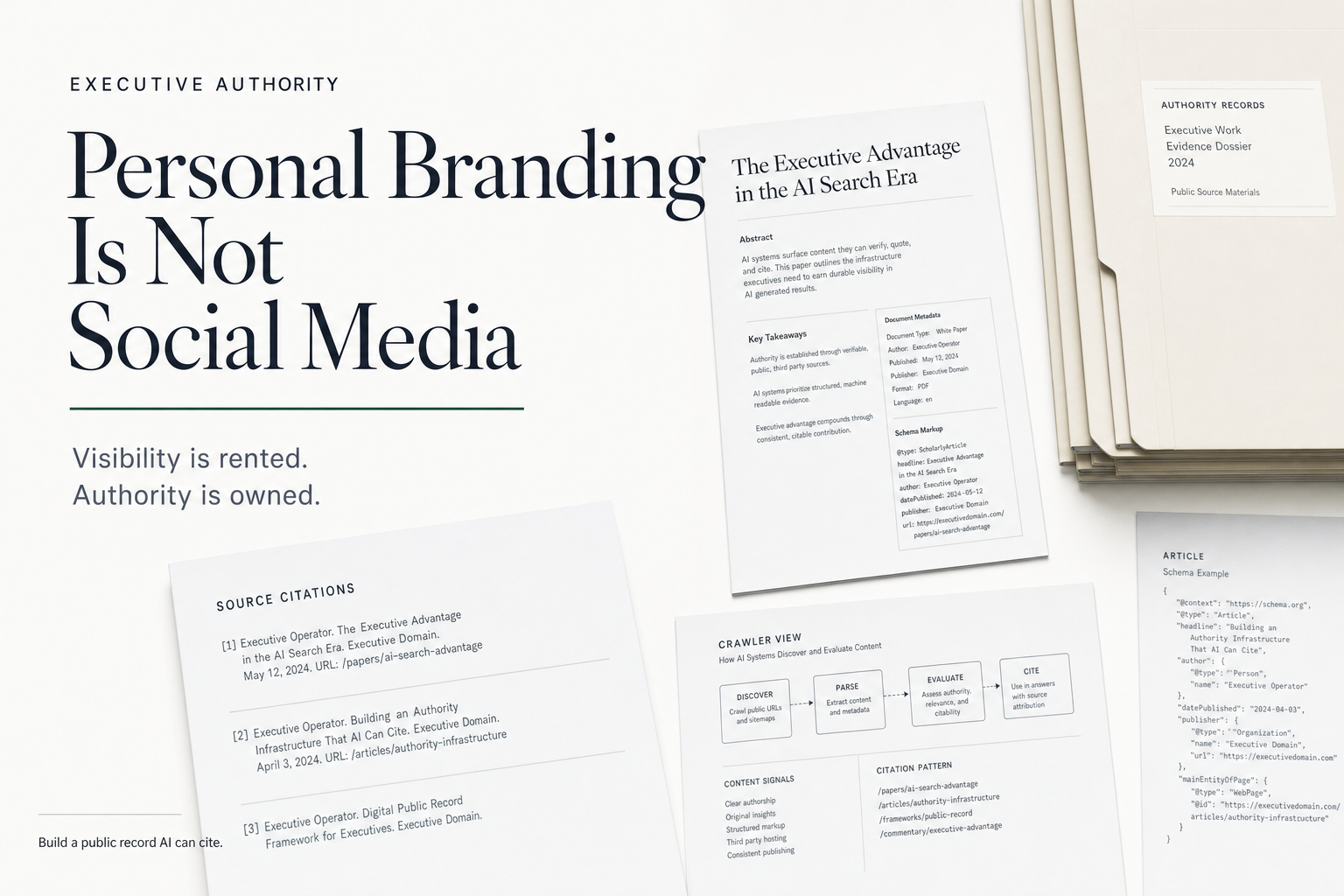
Authority is owned. It's a permanent, indexed, crawlable record of what you know, published on properties you control. When someone searches your name or asks an AI tool about your expertise, authority determines whether you appear in the answer or you don't exist at all.
I watched this shift accelerate over the past 18 months. Executives who built their presence entirely on LinkedIn started realizing that when prospects or board search committees asked AI tools for recommendations in their space, their names didn't appear. Not because they weren't qualified. Because they had no indexed record for the AI to cite. Social media gave them visibility inside a closed platform. It gave them zero authority outside it.
Why AI Search Changed the Requirements Permanently
Google AI Overviews, Perplexity, ChatGPT search, and Claude all work the same way. They crawl indexed content, extract expertise, and cite sources in answers. They don't cite your LinkedIn feed. They cite articles, white papers, and structured content published on domains with real authority signals: metadata, consistent authorship, inbound links, and content depth.
If your expertise isn't published in a format AI engines can crawl and cite, you don't exist in the answers they generate. That's not a hypothesis. That's the new infrastructure requirement for executive visibility.
A CISO I know spent a year publishing one article every two weeks on a domain he controlled, all properly structured with metadata, authorship, and schema markup. When a board search firm asked an AI tool for CISOs with expertise in industrial control system security, his name appeared in the answer with a direct citation. Three other candidates with bigger LinkedIn followings and more visibility didn't show up at all. The firm went with him.
That's the difference between visibility and authority.
The Infrastructure Gap Most Executives Never Close
Building real authority infrastructure means publishing on properties where content gets indexed, attributed to you by name, and structured so AI engines can extract and cite it. That requires four things most executives never put in place:
- A publication domain you control, not a third-party platform profile where your content lives under someone else's metadata
- Consistent authorship and byline structure across every piece, so search engines attribute the body of work to one entity
- Structured metadata and schema markup that tells crawlers what the content is about, who wrote it, and when it was published
- Inbound links from credible sources that signal to search algorithms and AI engines that your content is worth referencing
Most executives post on LinkedIn, maybe write an occasional guest article, and assume that's enough. It isn't. You need indexed, permanent content that compounds over time, not a feed that resets every week.
What Ownership Actually Means in Practice
Owned infrastructure means you control the domain, the metadata, the content structure, and the publishing cadence. When I talk to executives about this, the most common response is that they don't have time to build a personal website, manage a CMS, or learn SEO. That's the wrong framing.
Your public record is either infrastructure or a feed.
I built OnAtlas because I kept running into executives who understood this gap but had no system to close it. They knew social media wasn't enough. They knew they needed indexed, permanent content. But between managing a team, running a function, and staying current in their domain, they didn't have the time or the tooling to publish at the volume and consistency required to actually show up in AI answers.
The executives who get this right don't treat content as a side project. They treat it the same way they'd treat any other infrastructure investment: something that requires initial setup, ongoing maintenance, and a system that makes both sustainable without burning time they don't have.
The Compound Effect of Indexed Expertise
Every article you publish on owned infrastructure stays live, stays indexed, and keeps appearing in search results and AI citations for years. Social media posts disappear. Articles don't. The executive who published 50 pieces of structured, indexed content over two years will outrank the executive who posted 500 times on LinkedIn during the same period, every time, because search engines and AI tools prioritize depth and permanence over engagement velocity.
That's the compounding most executives never unlock. They chase visibility inside closed platforms and wonder why their expertise doesn't show up where decisions actually get made.
If your expertise only exists on social media, it doesn't exist.
More from James Faxon
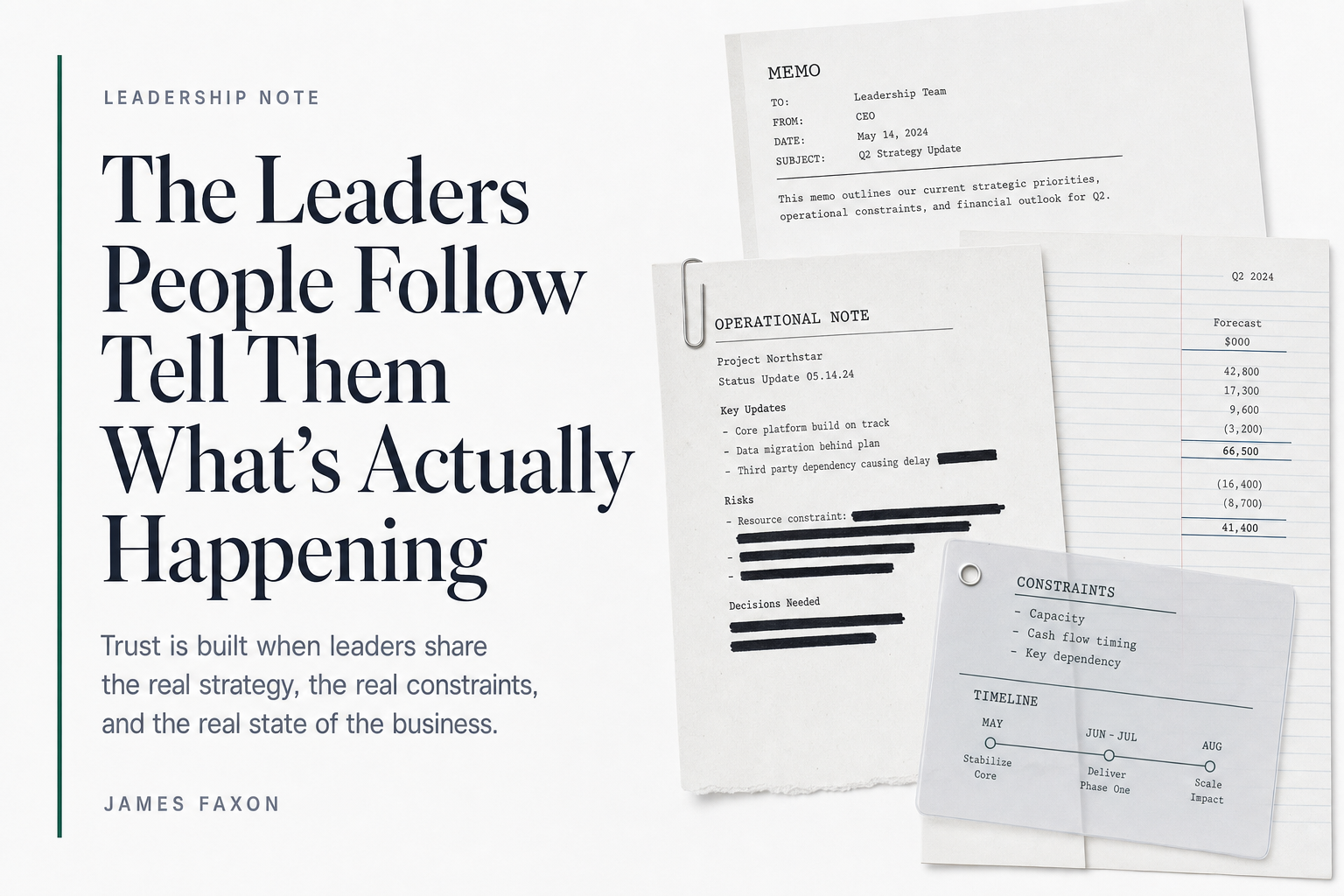
Leadership in the Post-Loyalty Corporate Era
· James Faxon · 6 min read · The Leaders People Follow Tell Them What's Actually Happening Key Insight: Most leaders respond to eroding corporate loyalty by...

The Real Strategic Layer Underneath Executive Content Nobody Wants to Talk About
· James Faxon · 3 min read · A few days ago I wrote something critical of ghostwriting, and it kicked off a good debate in the comments. One exchange in particular...
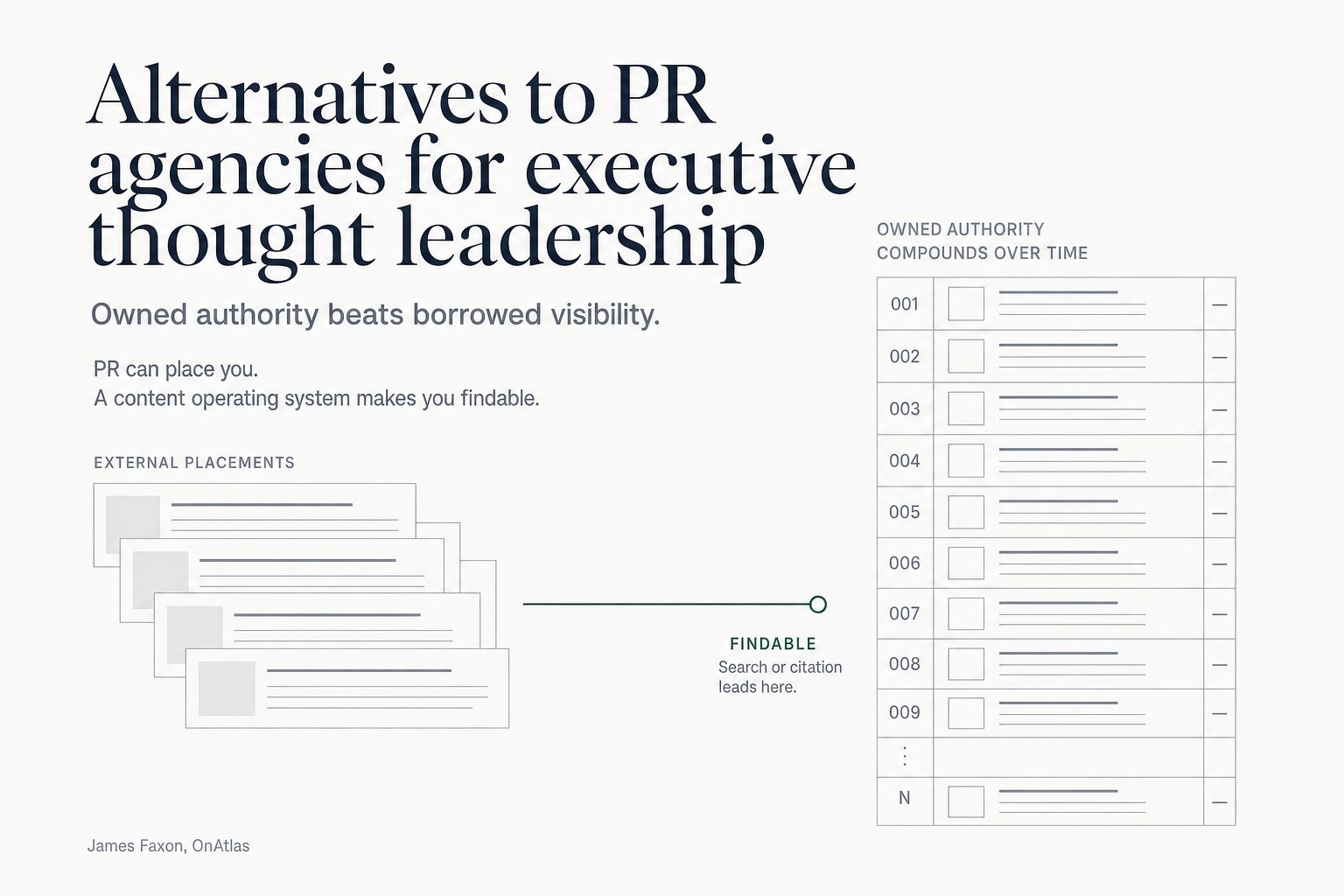
Alternatives to PR agencies for executive thought leadership strategy
· James Faxon · 6 min read · The Case Against PR Agencies for Executive Thought Leadership Key Insight: Most executives hire PR agencies expecting thought leadership...