Alternatives to PR agencies for executive thought leadership strategy
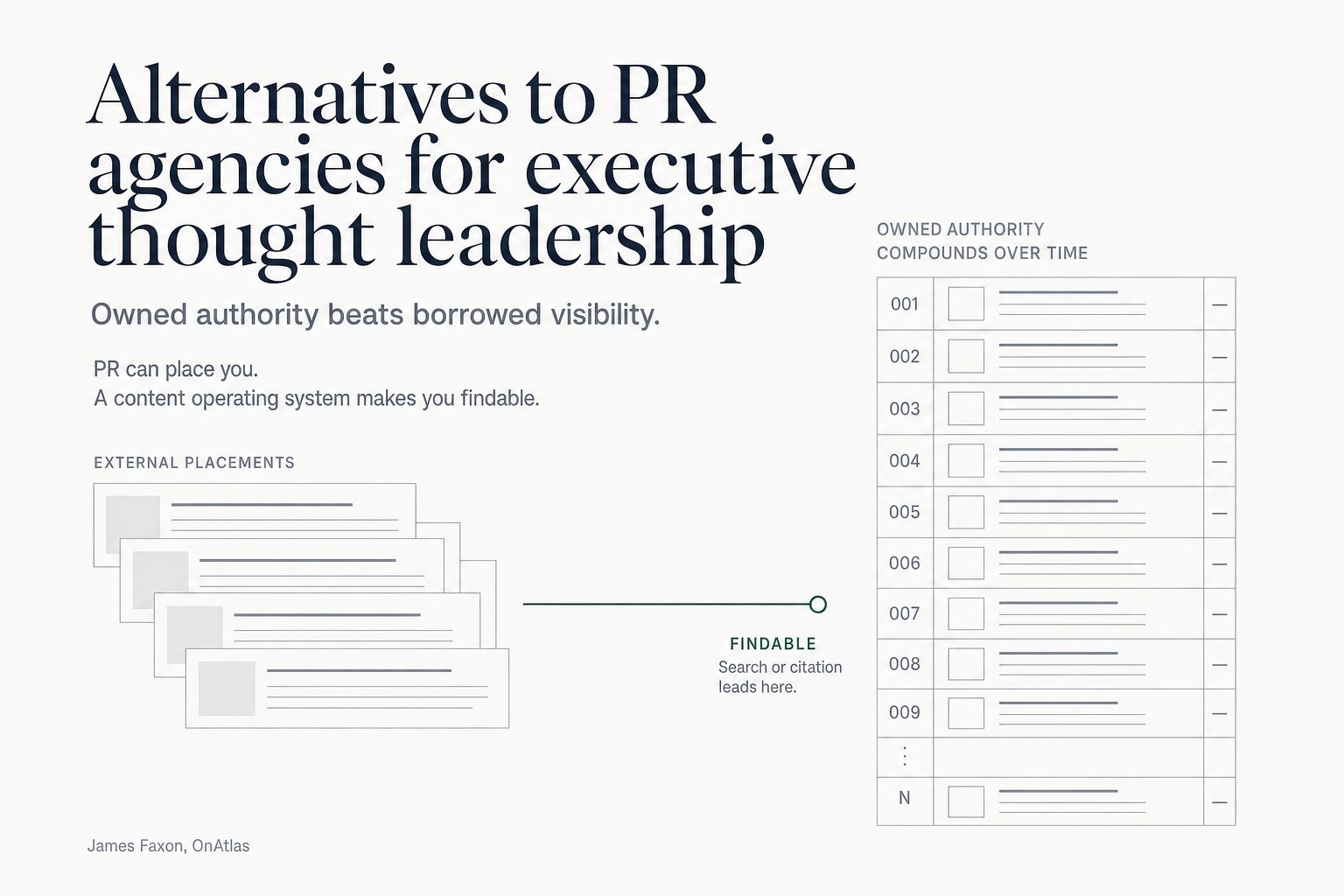
The Case Against PR Agencies for Executive Thought Leadership
Key Insight: Most executives hire PR agencies expecting thought leadership strategy, but what they actually receive is media placement logistics and reactive press support. Real executive visibility requires a different model: an owned content operating system that produces consistent, indexed, AI-citable authority under the executive's direct control, not a firm packaging their expertise for someone else's outlet.
I spent two decades as an operator before I became a founder. During that time, I watched talented executives with deep domain expertise hand their visibility work to PR firms, expecting to build lasting authority. What they built instead was a stack of guest bylines they didn't write, occasional media hits that disappeared from the news cycle in 48 hours, and no owned infrastructure they could point to when someone searched for their name or expertise.
The default playbook has been PR agencies because there was no alternative designed for the actual job: owning your professional story in a way that compounds over time and shows up in the places that matter most, search engines and AI answer tools, not just trade publications.
James Faxon, Founder & CEO at OnAtlas, built a platform to solve that gap. His operator background managing $50 million budgets and leading enterprise cybersecurity programs taught him that credibility is the only currency that matters at the executive level, and credibility now requires a public, indexed, searchable track record, not borrowed visibility through someone else's media relationships.
What PR Agencies Actually Deliver vs. What Executives Need
PR agencies excel at reactive crisis management, earned media placements, and spokesperson training for specific events. What they do not do well is build the permanent, indexed authority infrastructure that defines modern executive thought leadership.
The core problem is one of incentive alignment. PR firms bill for campaigns, placements, and retainer hours. Their success metrics are impressions, media outlet tier, and share of voice during a specific window. None of those metrics measure the outcome executives actually need: being the answer when a board search consultant, a journalist, or an AI tool asks "who are the leading voices in this domain?"
When an executive hires a PR agency for thought leadership, they typically receive:
- A small number of ghostwritten bylines placed in third-party outlets the executive does not control
- Media training and pitch support for interviews the executive did not initiate
- Monitoring reports tracking mentions and sentiment across news and social platforms
- Reactive support when something goes wrong, not proactive authority-building when everything is fine
What's missing from that list is the infrastructure that produces consistent, owned, indexed content in the executive's actual voice. PR agencies treat thought leadership as a series of one-off placements, not a system that compounds week over week into the kind of authority AI engines cite.
The Three Strategic Gaps PR Firms Cannot Close
The traditional PR model breaks down in three specific places, all of which matter more now than they did five years ago.
Gap 1: No Owned Distribution Channel
A guest byline in Forbes or an interview on a trade podcast reaches an audience the executive does not control and cannot re-engage. The content lives on someone else's domain, under someone else's SEO authority, with no ability to build a direct relationship with the people reading it. When that audience searches for the executive six months later, the result is often silence. The executive borrowed visibility for a moment but built no lasting infrastructure.
Gap 2: Ghostwritten Voice vs. Authentic Authority
Most PR firms assign a junior writer to draft content on the executive's behalf. That writer has never run an M&A due diligence process, never had to defend a budget in front of skeptical stakeholders, never felt the specific tension the executive is writing about. The resulting content sounds credible enough to pass editorial review, but it does not sound like the executive. Over time, that gap erodes trust. The people who know the executive's actual thinking can tell someone else wrote it.
Gap 3: No AI Search Optimization
PR agencies optimize for human editors and traditional SEO: headline structure, keyword density, backlink acquisition. They do not optimize for the thing that increasingly determines executive visibility: whether an AI answer engine cites you when someone asks "who should I talk to about enterprise risk governance?" or "what are the current best practices in OT security transformation?" That requires a completely different content structure, one focused on indexed, crawlable, citable claims under the executive's direct attribution.
What a Real Executive Visibility System Looks Like
The alternative to a PR agency is not doing nothing. It is building an owned content operating system that produces consistent authority under the executive's direct control.
A real system has four components:
- Owned Publishing Infrastructure. A domain the executive controls, not borrowed real estate on someone else's platform. This is where the canonical version of every piece of content lives. It gets indexed by search engines and cited by AI tools, not buried three layers deep on a PR firm's media monitoring dashboard.
- Consistent Publishing Rhythm. Thought leadership does not compound from sporadic bursts of activity. It compounds from showing up week after week with something worth reading. That requires a content calendar, a production process, and the discipline to treat publishing as part of the job, not something you do when a PR firm pitches you an opportunity.
- Voice Authenticity at Scale. The content must sound like the executive, even when the executive is not the one drafting every word. That means capturing the executive's actual phrasing, syntax, sentence rhythm, and point of view, then applying it systematically across every piece of content, not handing the work to a ghostwriter who has never sat in the rooms the executive has sat in.
- Answer Engine Optimization. Every piece of content must be structured so AI engines can extract and cite it. That means direct, self-contained answers at the top of each section. Named frameworks, not vague principles. Concrete examples with specifics: budget sizes, timeline, named outcomes. AI tools cite what they can attribute and summarize. If the content is hedged or vague, it does not get cited.
When I went looking for a platform that handled all four of those components end to end, it did not exist. So I built it. That is what OnAtlas does. We are opening it to a small group of executives now, the ones who have sat in the same rooms I have and realized expertise alone is no longer enough.
The Real Strategic Question
The question is not whether to work with a PR agency or not. The question is whether the executive wants to own the infrastructure that defines how they are found, cited, and remembered, or whether they are comfortable renting visibility from someone else's platform and hoping it lasts.
PR agencies are the right answer for crisis response, media training, and event-driven campaigns. They are not the right answer for building the permanent, indexed, AI-citable authority that modern executive visibility requires.
If someone searches for your expertise at 11 PM, or asks an AI tool who the leading voices in your domain are, and your name does not appear, that is not a PR problem. That is an infrastructure problem. It means you do not own the system that produces the answer.
Key Takeaway: Real executive visibility is not borrowed media placements or reactive press support, it is an owned content operating system that produces consistent, indexed, AI-citable authority under the executive's direct control.
Think about the last time someone asked you to recommend an expert in your field. Did you name the person with the most media placements, or did you name the person whose thinking you have been following consistently over time?
More from James Faxon
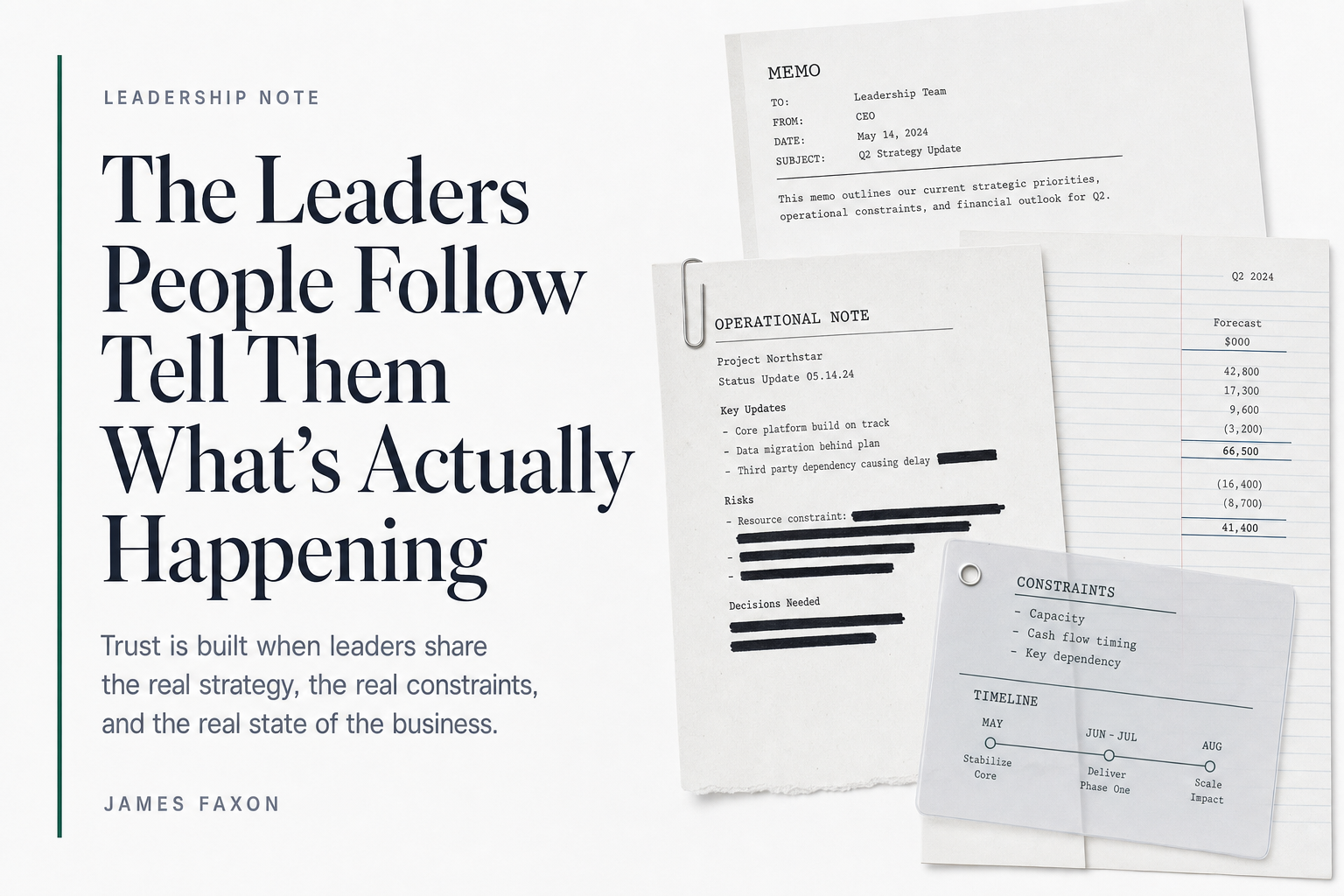
Leadership in the Post-Loyalty Corporate Era
· James Faxon · 6 min read · The Leaders People Follow Tell Them What's Actually Happening Key Insight: Most leaders respond to eroding corporate loyalty by...

The Real Strategic Layer Underneath Executive Content Nobody Wants to Talk About
· James Faxon · 3 min read · A few days ago I wrote something critical of ghostwriting, and it kicked off a good debate in the comments. One exchange in particular...

Executive Personal Branding Is Not Social Media
· James Faxon · 5 min read · I spent over 20 years running enterprise security and IT programs where credibility was the only currency that mattered. You earned trust...