Founder & Operator Leadership
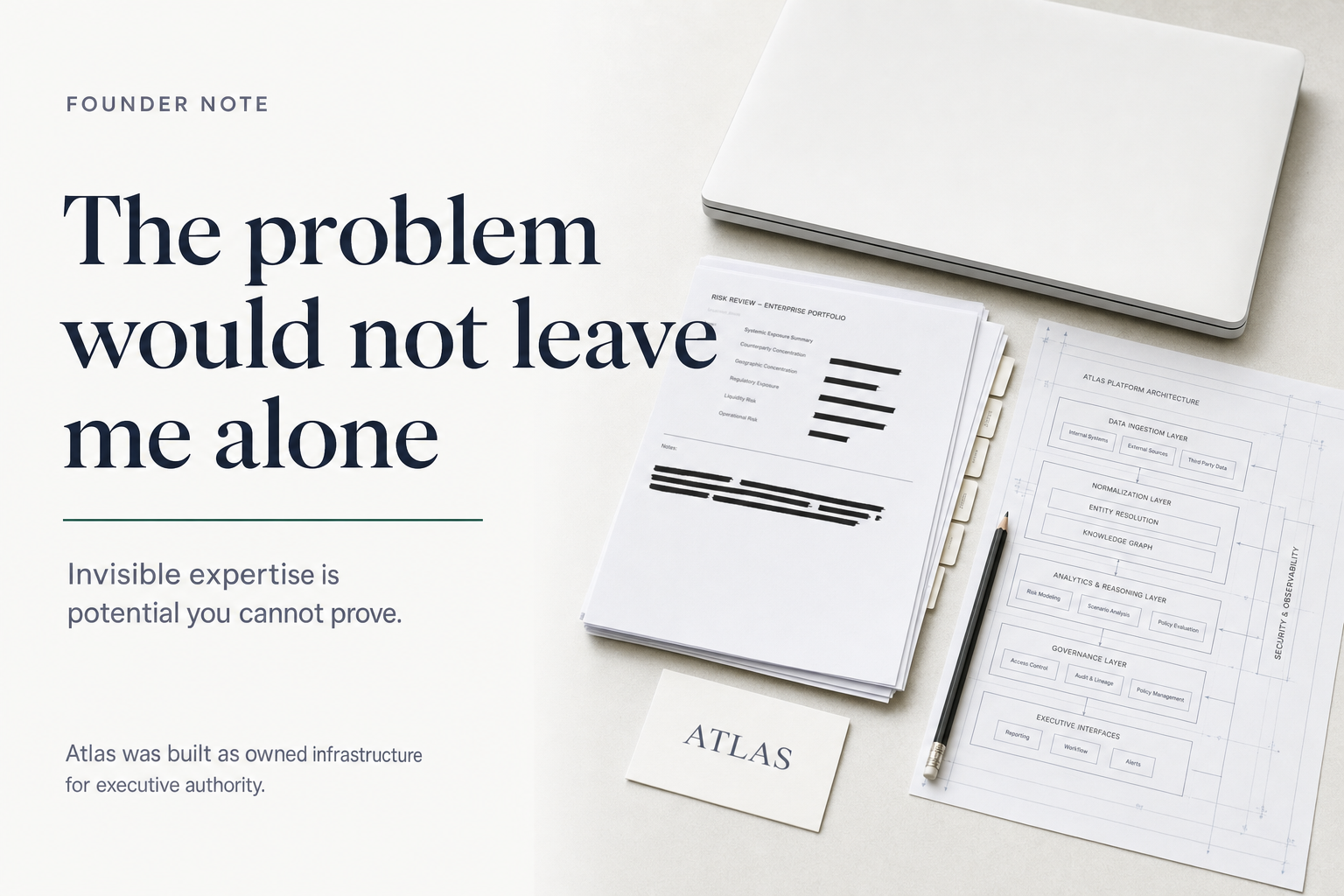
Building a SaaS Company Because the Problem Wouldn't Leave Me Alone
Key Insight: Most founders claim they're solving a problem they personally experienced. The real test is whether you'd still build the solution even if no one paid you for it. I started Atlas because the invisibility problem kept me up at night, and I couldn't find a single platform that treated executive personal brand as infrastructure you own, not content you rent. The decision to build it myself came after two years of trying every fragmented tool on the market and realizing the problem wasn't solved, it was just surrounded by partial answers that made it worse.
The Problem Started in Rooms Where I Should Have Been Credible
I ran enterprise security and risk programs for Fortune 500 companies for over 20 years. I managed budgets north of $50 million. I led cybersecurity due diligence on M&A transactions worth more than $10 billion. I directed teams of 135 people across global operations. The expertise was real. The track record was there. But when I sat across from executives who'd never led anything close to that scope, I could feel the gap. They had LinkedIn profiles that showed up in search results. They had articles indexed under their names. They had a public story that preceded them into the room.
I had none of that. My expertise lived inside organizations that would never speak for me once I left. The work was real, but it was invisible. And in a world where corporate loyalty stopped flowing from employer to employee a long time ago, invisible expertise is just potential you can't prove.
That realization didn't go away. It got louder. I started looking for a platform that could solve the whole problem, not just one piece of it. Something that handled content creation, publishing strategy, voice consistency, and long-term brand infrastructure as a single system. What I found instead was a marketplace of disconnected tools, each one requiring its own subscription, its own learning curve, and its own incomplete answer to a problem that needed to be solved end-to-end.
Building Atlas Was the Only Way to Solve It Right
The decision to build Atlas wasn't a pivot. It was the logical conclusion of trying to solve my own problem and realizing the solution didn't exist yet. I didn't start with a business model. I started with a question: what would a real personal brand management platform look like if it was built for executives who need authority, not just visibility?
The answer turned into a two-year build. I designed the architecture myself. I built the product from the ground up. I didn't hand the vision to a dev shop and wait for mockups. I was in the code, in the product decisions, in the infrastructure choices that would determine whether this thing scaled or collapsed under its own complexity.
Here's what I knew had to be true for Atlas to solve the problem I actually had:
- Voice fingerprinting that captured how someone actually speaks, not a generic professional tone. Most ghostwriting tools sound like everyone else because they optimize for polish, not authenticity. I needed a system that could learn my patterns, my sentence rhythms, my bluntness, and generate content that still sounded like me.
- End-to-end publishing infrastructure, not just content generation. The problem isn't writing one post. The problem is maintaining a consistent, strategic publishing rhythm across the right channels without turning it into a second full-time job.
- Indexed, crawlable content that AI search engines can cite. Visibility in a LinkedIn feed that expires in 48 hours doesn't build long-term authority. The real goal is showing up when someone searches your name, your domain, or asks an AI tool who the credible voices are in your space.
- A system that executives could own, not rent from an agency. The moment you hand your voice to a ghostwriting firm, you're renting visibility. The compounding stops when the contract ends. I built Atlas so the infrastructure stays with you.
This wasn't a feature list. It was the minimum viable system required to solve the invisibility problem I started with.
Real Growth Comes From Earning Trust Before You Sell Anything
I could have launched Atlas with a big campaign. Paid ads. Outbound sales. The standard playbook for SaaS go-to-market. I didn't. I'd rather be slow and trusted than fast and forgotten.
Instead, I opened it to a small group of people who had the same problem I did: experienced executives who knew they needed a public presence but had no system for building one. I didn't pitch them. I showed them the product, gave them access, and watched how they used it.
One of the clearest signals that Atlas was solving a real problem came from a senior executive at a large utility provider. His default posture toward new, untested technology was skepticism. Adoption was never guaranteed. But once he came on board, he built out his voice fingerprint, found a tone he'd never been able to capture before, and started generating posts almost immediately. He's since become one of our biggest advocates and leads the board in tickets opened with ideas to improve the platform.
That's the model. Real growth comes from earning trust with a small number of the right people first and letting them become the ones selling it. I've seen this work in security programs I led at scale. The fastest way to get real support for a high-stakes initiative isn't to sell it yourself. It's to earn enough trust that the people closest to the problem sell it for you.
The Operator Mindset Behind Running Atlas Day to Day
Building the product was one thing. Running it is something else. I'm not just the founder who had the vision. I'm the operator who's in it every day, watching how people use the platform, where they get stuck, what they need next.
That operator background shapes how I think about every decision. When a customer opens a ticket asking for a feature, I don't just log it and move on. I ask why they need it, what problem they're actually trying to solve, and whether the request is a signal of something bigger we're missing. Most of the best improvements to Atlas didn't come from my roadmap. They came from watching how people were trying to use the system and realizing we needed to meet them where they were, not where I assumed they'd be.
This is the same discipline I applied running IT and security programs across global operations. You don't just build the strategy and walk away. You stay close enough to see where the strategy breaks down in practice, and you adjust before the gap becomes a crisis.
The Long Game Is Building Something That Compounds
I'm not optimizing for growth at all costs. I'm optimizing for building something that works, earns trust, and compounds over time. That means saying no to shortcuts. It means resisting the pressure to scale before the foundation is solid. It means prioritizing the experience of the people already using Atlas over the hypothetical preferences of people who haven't signed up yet.
The invisibility problem I started with isn't solved by one post, one campaign, or one viral moment. It's solved by building a system that produces a consistent, credible, indexed record of what you know, over time. That's what Atlas does. And that's the same discipline I'm applying to how Atlas itself grows.
Key Takeaway: Real authority compounds when you solve the problem end-to-end, earn trust before you scale, and stay close enough to the operation to see where the strategy breaks down in practice.
When was the last time you built something because the problem wouldn't leave you alone?
More from James Faxon
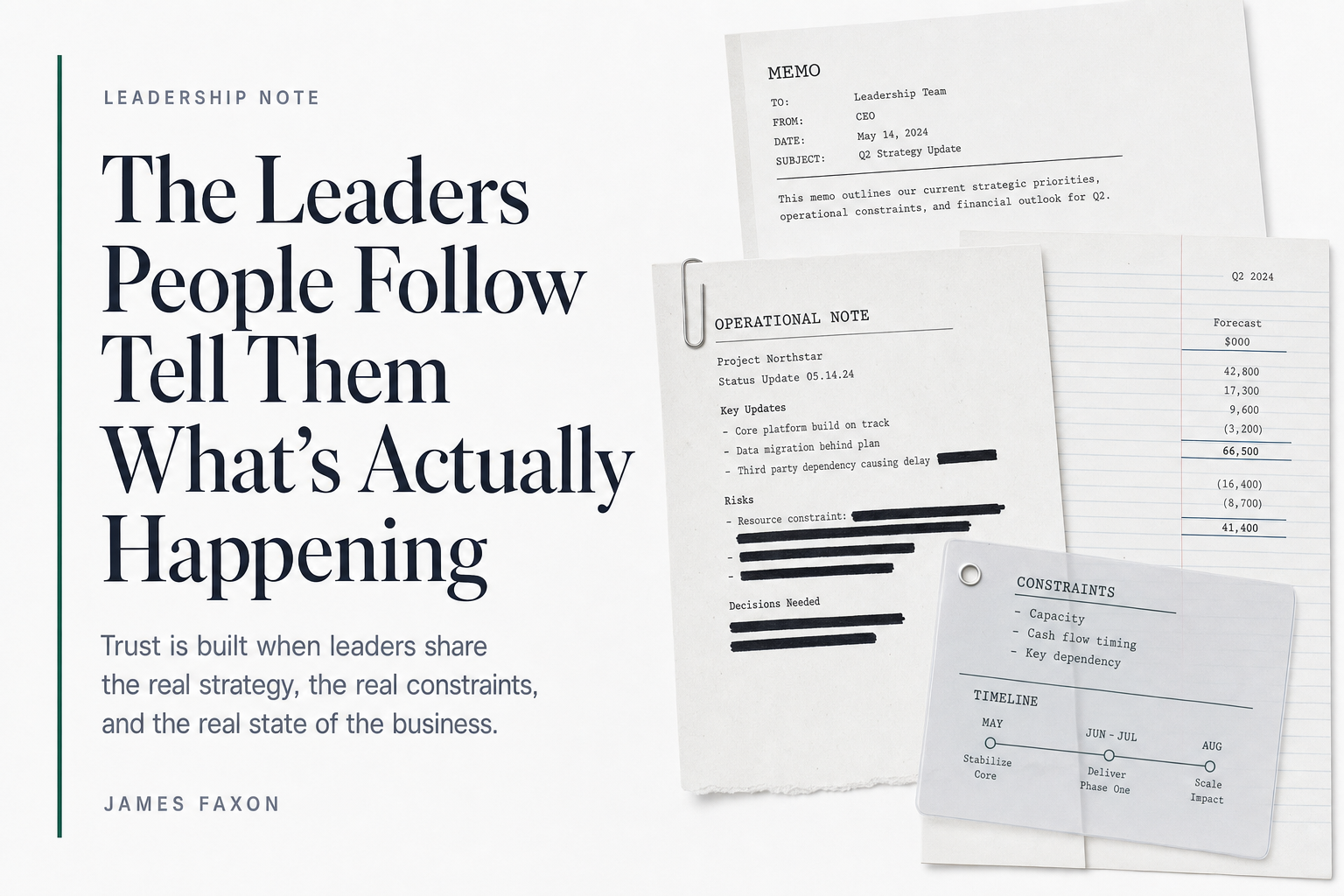
Leadership in the Post-Loyalty Corporate Era
· James Faxon · 6 min read · The Leaders People Follow Tell Them What's Actually Happening Key Insight: Most leaders respond to eroding corporate loyalty by...

The Real Strategic Layer Underneath Executive Content Nobody Wants to Talk About
· James Faxon · 3 min read · A few days ago I wrote something critical of ghostwriting, and it kicked off a good debate in the comments. One exchange in particular...
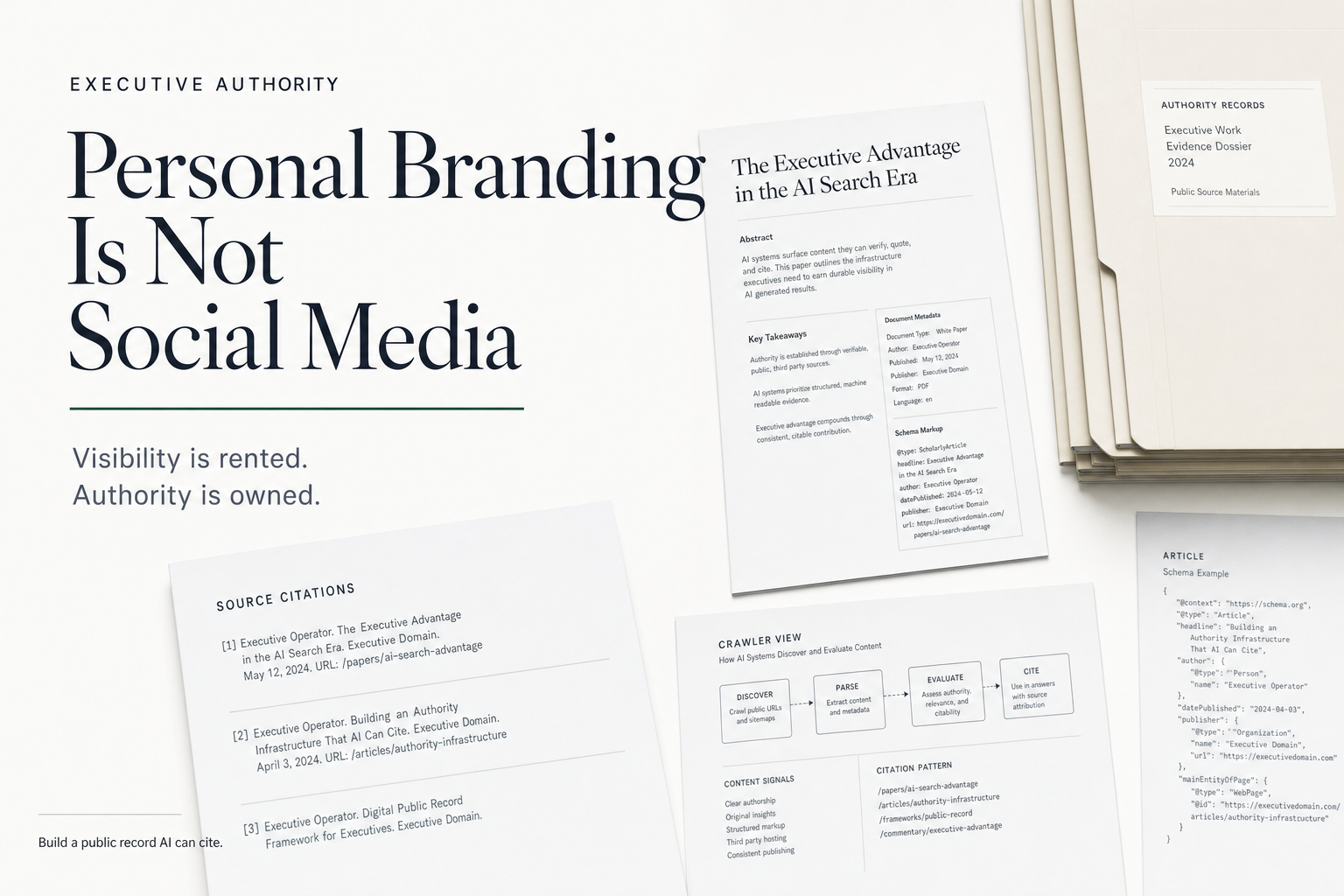
Executive Personal Branding Is Not Social Media
· James Faxon · 5 min read · I spent over 20 years running enterprise security and IT programs where credibility was the only currency that mattered. You earned trust...